Subaru Sambar import guide
Rear-engine kei truck · 660cc · 4WD heritage
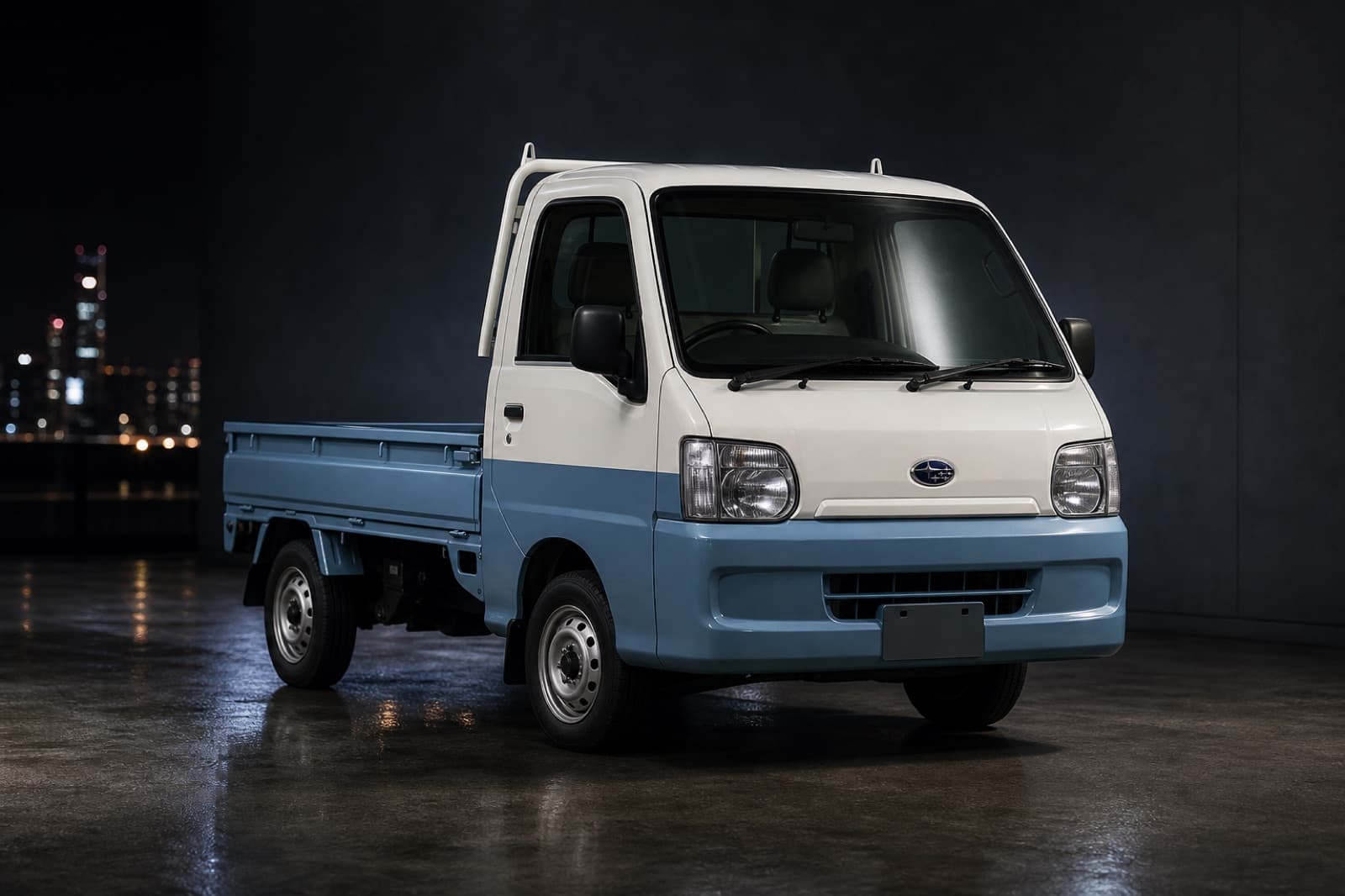
The Subaru Sambar is the enthusiast's kei truck: rear-engine, rear- or four-wheel drive, and built by Subaru with its trademark engineering quirks. Some versions even came supercharged. We source Sambar trucks and Dias vans from Japan.
- Rear engine
- Subaru 4WD
- Supercharged trims
At a glance
Subaru Sambar quick facts
- Type
- Kei truck (Dias = kei van sibling)
- Engine
- 660cc, rear-mounted (EN07)
- Drivetrain
- Rear-wheel drive or selectable 4WD
- Generations
- KS3/KS4 (1990–98), TT1/TT2 & TV (1999–2012)
- Notable
- Available supercharged EN07
- Import eligibility
- 25+ year examples are FMVSS-exempt
Overview
Why import a Subaru Sambar
The Sambar is the oldest kei-truck nameplate still recognized by enthusiasts, and the only one historically built by Subaru with a rear-engine layout. That gives it excellent traction over the drive wheels and a distinct character versus front-cab rivals.
Subaru offered the Sambar with four-wheel drive and, on some trims, a supercharged EN07 engine — a rare bit of performance flavor in a kei truck. The Dias models add a more comfortable, van-bodied option.
- Rear-engine layout for strong rear-wheel traction
- Subaru four-wheel-drive heritage
- Available supercharged EN07 on select trims
- Truck and Dias van body styles
Generations
Sambar generations & variants
The KS3/KS4 trucks (1990–1998) are fully import-eligible and prized by collectors. The TT1/TT2 generation (1999–2012) keeps the rear-engine layout and is becoming eligible year by year before Subaru moved Sambar production to a rebadged Daihatsu Hijet in 2012.
- KS3 / KS4 — classic rear-engine trucks, fully eligible
- TT1 / TT2 — 1999+ rear-engine generation
- Dias / Dias Classic — upscale van trims, some supercharged
- WR Blue and special editions for collectors
Buyer notes
What to look for at auction
- Rear-engine bay access and oil-leak history on EN07
- Supercharger condition where fitted
- 4WD engagement and CV/driveline health
- Frame and bed rust on working trucks
- Auction grade, mileage, and service records
Importing
Importing a Sambar to the U.S.
Under the U.S. 25-year rule, a vehicle is exempt from FMVSS once it is at least 25 years old. Eligibility is rolling — each model year becomes importable on the anniversary of its build date.
State registration determines whether you can drive a Sambar on public roads. Many states title kei trucks for the street; others restrict them. Confirm your state's rules first.
Keep exploring
Related import guides
Honda Acty
Kei truckHonda's rear/mid-engine kei truck and van — reliable, affordable, and one of the most popular U.S. imports.
Suzuki Carry
Kei truckJapan's best-selling kei truck — huge supply, strong parts support, and dependable 4WD options.
Daihatsu Hijet
Kei truckEconomical kei truck famous for its extended 'Jumbo' cab and excellent fuel economy.
Mitsubishi Minicab
Kei truckMitsubishi's durable kei truck and van — solid 4WD options and strong value at auction.
FAQ
Subaru Sambar import — common questions
- Why is the Subaru Sambar special among kei trucks?
- It's the rear-engine option. Subaru historically built the Sambar with the engine in the back for excellent drive-wheel traction, and offered four-wheel drive plus a rare supercharged variant — giving it cult status among kei enthusiasts.
- Did the Subaru Sambar come supercharged?
- Yes. Select Sambar trims, particularly upscale Dias models, were fitted with a supercharged EN07 engine for extra punch. These are sought-after, so confirm the spec on the auction sheet.
- Is the Subaru Sambar 4WD?
- Many Sambar trucks and vans came with selectable four-wheel drive, in keeping with Subaru's reputation. Plenty of rear-wheel-drive examples exist too — verify the drivetrain before purchase.
- Is a Subaru Sambar street-legal in the U.S.?
- Sambar trucks 25+ years old import legally under the FMVSS age exemption. Road registration depends on your state — see our state import guides for details.
- Are later Subaru Sambars actually Daihatsu Hijets?
- From 2012, Subaru stopped building its own Sambar and rebadged the Daihatsu Hijet. The genuine rear-engine, Subaru-built Sambars are the pre-2012 KS and TT generations enthusiasts seek out.
Import eligibility and state registration rules change over time and vary by vehicle. Confirm current requirements before purchasing. This page is informational only and not legal advice.
Ready to import a Subaru Sambar?
Pacific JDMsources and finds vehicles across Japan every week. Browse what's in stock or have us source the exact Sambar you want from Japan.